20 answers to the question: “But what should I blog about?”
Relax. Don’t try so hard.
If you focus on the stuff that matters to you, everything else will fall into place: finding readers, an audience, your tribe.
Pay attention to what you Tweet and share on Facebook.
Maybe that’s the material you should be blogging about. Every time you share an article or tweet or retweet a link, you’re microblogging. Why not blog-blog it? Take a few extra minutes and say something about that link and you’ve got a blog post.
I was on Facebook for a few years before I started blogging. I thought, What the hell do I have to blog about? After about a year or so on Facebook, I found that most of my friends were other writer/teachers. People I worked with. People I’d gone to school with. People the people I worked with had gone to school with.
Sometimes these people I knew from Facebook would come up to me in the hall or write to me privately and say, “I like being friends with you. You always share things I find interesting.”
Really? I wasn’t trying to share interesting things. I was just doing what came naturally to me. Talking about shit I liked to talk about.
That’s when it hit me: I should blog about my teaching.
Because I love to talk about teaching. I love to figure out how to make a class go better. I love telling other people how I do things and finding out how they do things.
Aside: I’ve worked with many people over the years who could give a rat’s ass about their teaching, people who never want to talk about it ever, or who always want to talk about it—negatively. I don’t get along with these people, and they don’t get along with me. I don’t want to sit around bitching about classrooms or paper grading or my students, and I don’t want to spend time with people who want to do this. I feel kind of sorry for these people, actually, because nobody should spend their life doing something they hate. I really wish they would do something else with their lives. I want them to be happy. (This is not to say that university teaching isn’t a difficult job of gross inequities, a job many people do for not much money, few benefits, etc. I’m talking about people who just don’t like it.)
I’m amazed that it actually took me two years to figure out that I should blog about teaching.
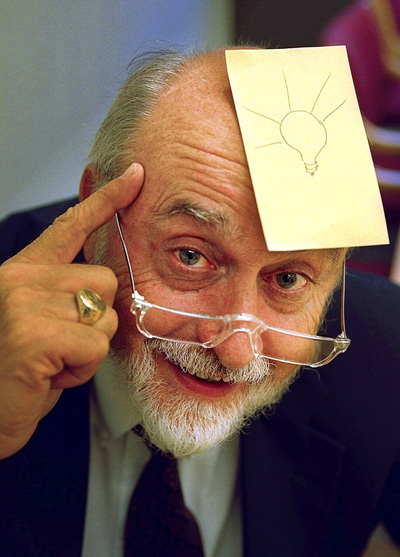
Like, duh? I was this person walking around with a big sign on my forehead. Everyone else saw this sign, everyone understood this sign’s essential truthfulness, but I couldn’t see it.
Ask the people in your social network, “Hey friends, what do I talk about a lot?” Or “What do you count on me for?” Listen to what they say.
Ask the people in your Real Life the same questions.
If they say things that make you go, Ouch, pay attention to that, too.
Maybe you don’t know what to blog about because you’re not surrounded by good ideas.
If the quality of discourse in your Twitter feed or your Facebook feed brings you down, start hiding people or defriending or unfollowing people. If your “friends” whine and complain and bash, banish them. Life’s too short to spend your time hanging out with people who bring you down and who have no good ideas whatsoever.
Start getting some NEW friends.
Also, take a look at what you’re putting out there. Social media can be a force for so much good in the world. If you’re not putting some good in the world, then start.
Why should anyone read your blog if you don’t read any blogs?
Start reading some blogs and start commenting. You love comments. Give some, and you’ll get some.
Start reading some online magazines and bigger blogs and commenting on topics you care about. Make sure that your Disqus profile or Gravatar or whatever those things are that enable people to click and learn more about you, make sure that shit’s working so that your tribe can find you.
Finding your online community is similar to that day in high school or college when everyone signs up for clubs.
Start joining some new clubs, people.
The things you blog about: that’s like you sitting at a table saying, “I like [blank]. Be in my club.”
You can follow and friend “celebrity” writers if you want. Sure. You can review books that already have 2000 reviews on Amazon. But people, those writers, those books don’t really need your help. There are many, many other writers and books that DO need your help.
Tonight my students asked, “But who are those writers? What are those books?” People, I can’t answer that, because the answer is different for everyone. But I can tell you this:
- the searching you do to find them is a very important process, and I can’t do it for you.
- you will know when you find these writers, these books because you’ll get really excited, and that’s how you know you’re onto something.
Like Austin Hayden said tonight, read the magazines that you’d like to be published in and friend or follow the people who ARE getting published in those magazines. Better yet, talk about those magazines, those writers on your blog in a genuine, meaningful way, and I promise you, you won’t have to friend anyone. They’ll friend you.
I used to work in publishing, and knew that those books on the front tables at the bookstore–publishers paid for that space. So I would go to the fiction shelves and find a book I’d never heard of, shelved with its spine facing out (sometimes shelving with a cover out was another marketing tactic), of which they’d only have one copy, and buy it. (This was back when I was working, and thus had disposable income to buy books, as opposed to getting them from the library.) I can’t remember ever being disappointed in finding writers this way.
(I also used to find “my” authors, the little-known writers I worked with, and turned their books cover out.)
Your bookstore practice: guerilla literary citizenship!
This is so incredibly helpful. I am so inspired and I cannot wait to begin a blog.
Very awesome article! I really enjoyed it. It’s funny how the answer is usually so simple, to write what you are passionate about. 😀