Book Reviewing in the Social Media Age: or, What if Mark Richard and I Had Been Facebook Friends?

Share

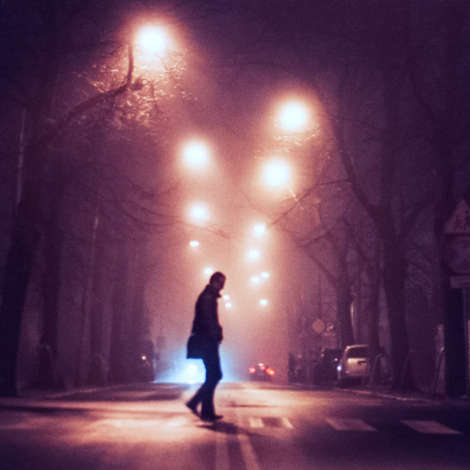
For a time, I was completely obsessed with this headshot of Mark Richard. I wanted one just like it someday. (Didn't happen.)

For a time, I was completely obsessed with this headshot of Mark Richard. I wanted one just like it someday. (Didn’t happen.)

Here’s a question: What if I’d become a writer after–not before–social media? If you’re my age, do you ask yourself this question as often as I do?

Mark Richard was one of a handful of writers who made an enormous impression on me early in my apprenticeship. (I’d use Andre Dubus here, but he’s deceased, much to my sorrow.)

What if, after reading Mark Richard’s story “Strays” in Best American Short Stories 1989, I’d friended or followed him?

"Strays" and "On the Rope" changed my life.

“Strays” and “On the Rope” changed my life.

If you’d like to read more of my thoughts on this subject, just go here. It’s a cross post between between The Big Thing and Literary Citizenship.

Basically, I speculate that social media might have made Mark Richard’s name as recognizable as Dennis Johnson, Annie Proulx, and Stuart Dyek, other writers who published collections around the same time.

I have no idea if this is true or not, but it’s interesting to think about.

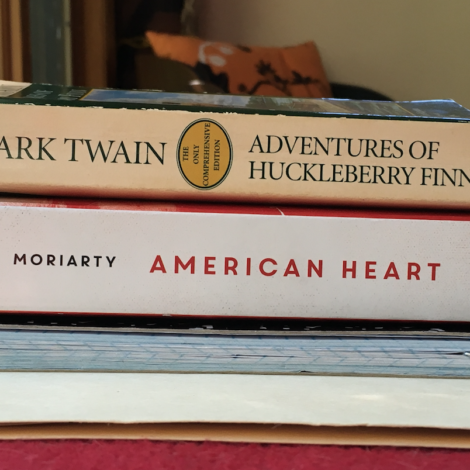
Who else was a big fan of this book? I know I was. Big time.

Posted in Literary Citizenship, Teaching, Writing | Tagged , , , , | 4 Comments

Bringing New York Publishing to Muncie, Indiana

Share

This is the table where BSU Board of Trustees meets. It's kind of awesome.

This is the table where BSU Board of Trustees meets. It’s kind of awesome.

Thanks to a grant from the Discovery Group, I’ve hired 11 Ball State students for internships at this summer’s Midwest Writers Workshop.

I’ve told you before about this conference, but here it is again.

Some backstory

Ever since I arrived at Ball State in 2010, I’ve been trying to come up with a way to expose students to the benefits of this conference.   MWW is run by a group of dedicated volunteers. It’s not funded by Ball State University; it just happens to take place on campus. One day, I was talking about this to BSU professor Beth Turcotte (who knows everything about how to find the resources to make amazing things happen) and she recommended I look into the Discovery grant, and boom, I applied. In December, I found out I was a finalist and made a presentation to the members, and in February, I found out I’d been funded. I quickly put out a call for applications, and by April, I’d assembled my team.  Continue reading

Posted in Literary Citizenship, Teaching | Tagged , , , , , | 3 Comments

When and how do students write?

Share

I found this great article the other day, “Seven Effing Great Ways to Build Your Writing Routine.”  The author encourages us to find our writing “sweet spots” in order to maximize our daily/weekly output.

Consider the following questions:

  • How long does your typical writing session tend to last?
  • How frequently do you sit down to write?
  • On average, how many words do you write per session?
  • At what time of the day do you do your writing?

Back when I taught novel writing as a “writeshop,” my students wrote in class and we talked a lot about writing process. I’ve moved away from that model over time, but next year, I need to be more explicit and deliberate about talking to students about WHEN and HOW they write. I’ll share this article with them.

Also: I’m thinking about having students log in or “check in” when they’re writing. Like the way I can check in on Facebook or GetGlue when I’m watching a particular TV show or reading a certain book. (What do you think about this, friends?)

Context

This semester, I lowered the Weekly Words requirement from 12 weeks of 2,250 words to 10 weeks of an even 2,000 words.

This is way down from the 12 weeks of 3,300 I required three years ago. Why did I let up? Ball State students take 5 and 6 three-credit classes a semester, not 4 four-credit classes, and most hold down jobs. I felt like I was asking too much–given their circumstances–and the burn-out rate was significantly lower this term. No one dropped.

  • Of the 15 students enrolled, only two drafted less than 20,000 words. They came up with a partial by the due date, but missed a few weeks here and there.
  • Ten turned in 20,000 to 25,000 words, or a little over the required amount.
  • Only two turned in well over the required amount every single week and thus ended up with double the required words. In fact, they were so close that I decided to feature them both here.

The Winners

Adam Gulla came in first place with 40,000 words. He gets a subscription to Poets & Writers. 

Adam Gulla

Adam Gulla

He took me up on my offer to “count” handwritten journaling and drafting. Every week, he turned in 2,000 words in a Word doc, plus he’d scan his journal pages where he wrote up character profiles, developed backstory, and built the world of his science-fiction novel.

One of about 50 such pages Adam sent me over the course of the semester. .

One of about 50 such pages Adam sent me over the course of the semester. .

We came up with a formula for what each page equaled.

Smart idea.

Every semester, I encourage my students to do this, to “count” pre-writing AND writing-writing, but Adam is the first student to take me up on that offer.

Veronica Sipe came in second, less than a thousand words behind Adam at 39,290.

Veronica Sipe

Veronica Sipe

She’s working on a historical novel with post-colonial themes (she’s also majoring in Spanish) that takes place in an invented South American country.

As I look back at my weekly emails from Veronica, I see that she always sent me her words well ahead of the deadline, and that she always had more than the required 2000 words.

So, what do Adam and Veronica have in common?

When and How They Wrote

Here’s how they answered the four questions above.

How long does your typical writing session tend to last?

Adam: I tend to have multiple writing sessions a day. My quick, sporadic writing sessions usually last twenty minutes each. My planned writing sessions last two hours.

Veronica: I have two kinds of writing sessions: casual ones that last about an hour and a half, and longer ones that can last as long as five hours, with a couple short breaks. Those are rare, though.

How frequently do you sit down to write?

Adam: I try to write multiple times a day, every day (and despite my best intentions, this is not always accomplished). What usually ends up happening is this: I get up in the morning and crank out a few words before class; I write during my lunch break; I write in short spans after each homework assignment I complete; and finally, I write later in the evening.

Veronica: During the school year I find time for writing maybe once or twice a week. More often in the summer.

On average, how many words do you write per session?

Adam: During my quick writing sessions, I tend to get 200 words on the page. During my planed writing sessions, I come out with around 1200 words (again, despite my best intentions, this is not always the case).

Veronica: If I have direction I can get about 2000-3000 words in a couple hours.

At what time of the day do you do your writing?

Adam: I write at all times of the day, but late nights (9 PM – 2 AM) and early mornings (5 AM – 8AM) are the most productive times for me to write. During these hours, no one disturbs me, and I can devote complete focus to my work.

Veronica: On days when I have nothing else to do, I like to write in the early afternoon. On work/school days, I prefer writing at night. I also like to take a notebook to work and to lecture classes so I can write if I have a break or get bored. Which is probably not very responsible, but oh, well.

Adam: For the longest time, I used to edit while writing (I still find myself doing this on occasion). It was a constant process of adding and taking away until two hours were gone, and the only things I had to show for it were a few paragraphs of roughly 500 words. Sometimes, I could spend as much as ten minutes deciding on the “perfect” word. As you can well imagine, my writing routine used to crawl by slower than a crippled snail. It was frustrating. It took me months to write a short story. And worst of all, the stories suffered from it. I would spend so much time consumed by sentence level concerns and specifics that the elements of plot, character, and story logic were being neglected.

I have since adopted the process of getting everything inside me on the page first and foremost, without being too selective. By doing this, I dump my ideas without hindrance. From here it’s a matter of going back over the rough draft and touching it up, piece by piece. This process has more than doubled my writing proficiency. I find it much easier and much more convenient to have words on the page that I can work with. For me, the most enjoyable and productive part of writing is rewriting. By using this process, it streamlines my writing routine.

Congratulations you guys! And I hope you finish those novels! 

Posted in Teaching | Tagged , , , | 2 Comments

Top 10 reasons to come see The Circus in Winter on 4/25

Share


Oh man, I'm so excited to hear the "Higher Ground"/Flood sequence again, I can't even tell you.

Oh man, I’m so excited to hear the “Higher Ground”/Flood sequence again, I can’t even tell you.

1. Sutton Foster will be there. Not performing. Just watching. But still…Sutton freaking Foster, people.

2. My parents will be there. They are cute.

3. My sister will be there. She is cute.

4. The President of Ball State University, Jo Ann Gora will be there. Note that I put my family before President Gora but after Sutton Foster…please don’t read too much into this. I need to keep my job and my family relations intact.

5.  Thanks to Goodspeed Musicals in Connecticut and to the hard work of Beth Turcotte, Ben Clark, producer Sean Cercone and others, the book (the story, the script) is better. The plot is different from the version you might already be familiar with. There’s a new character!

6.  There’s some new music, new songs by Ben Clark. So yay! new material by Ben! (You’ve probably seen him on teeeee-veeee…)

7. I hear the whole band will be there, too! Yay Joe Young on the mandolin! Yay Nick Rapley on percussion! Will Sean Muzzi be there, too? (He just got a gig playing for the Glenn Miller Orchestra!)

8. It’s a concert reading. And the next morning, they’re taking off for NEW YORK CITY to perform in front of a select group of investor-type folks. So we need to send them off with a bang, like in a pep rally sort of way!

9. WHERE IS IT? It’s taking place at 8 PM, 4/25 at the Cornerstone Center for the Arts, 520 E. Main St., in downtown Muncie, which also happens to be a block from my house, so yay! I can stumble home happily afterwards.

10. It’s free and open to the public, so tell all your friends!

Posted in The Circus in Winter | Tagged , , , , , , , | 4 Comments

The Next Thing: Professionalization in Creative Writing

Share

Careers (job search)Not every Creative Writing major wants to go to grad school, and to be honest, I’m not even sure if most of them want to be published writers. What brings them to our classes, I think, is a desire to be connected to the world of books. This essay by Dean Bakopoulos speaks to that desire.

Creative writing isn’t a pre-professional discipline. We’re not like some academic majors which prepare students for a concrete, discernible “next thing,” such as graduate study, this job, that career path. When my students say, “What I can do with this degree?” I talk about “transferable skills.” I point them in the direction of the career center.

To be honest, I hate it when they ask me that question, because I know there are no easy answers. I wish there WAS a concrete, discernible “next thing,” because I’d feel so much better if what I did for a living helped people afford health insurance.

Here’s an answer from a great writer, teacher, and literary citizen, Dinty Moore. (He posted this on Facebook a few days ago, and I hope he doesn’t mind my sharing it here.)

Dear E****

The short answer is that you will have to be creative in your job search if you major in poetry: you might end up working in editing or publishing or you might end up in a field entirely unrelated. This is hard for parents to understand, but students often end up finding careers well outside of their majors no matter what they choose. I have spent most of my life around writers, poets, painters, dancers, actors, and though many of them wait tables, tend bar, sell real estate, or do data entry, none of them in my experience is actually starving to death. People find ways to survive and still do what they love. Of course, your parents want you to choose accounting and then go immediately into an accounting job and stay there all of your life, so they never have to worry about you. I understand that impulse: I have a daughter as well. That is just something you’ll have to work out, based on your relationship with your parents, how badly you want to be a writer, and other factors.

But here’s the deal: just because it’s hard to answer the question “What can I do with this degree?” doesn’t mean it’s not a fair question. We should try to answer it. And every school, every program DOES try to answer that question–even if it’s to point students in the direction of the career center or internship office.

What we don’t have in the discipline of creative writing, especially at the undergraduate level, is a tradition of offering courses engaged in the direct professionalization of students.

This year, I’m on a committee that reviews curriculum proposals across the sciences and humanities, and I’ve come across a variety of courses in other departments–1 credit, 2 credits, sometimes 3-credit courses–in which the practical necessities of career planning are brought into the classroom.

For example, check out this capstone professionalization course offered in my own department–within the Professional Writing minor.

On the other hand, I think it’s also true that CW students don’t always recognize “professionalization” when they see it, when it’s actually happening to them.

For example, on the first day of my literary citizenship course, a student said she wished that our CW major “did more” to teach students about publishing and related careers.

And I said, “Well, we offer a year-long course in Literary Editing and Publishing, during which you edit a national literary magazine.  And we offer a class called Creative Writing in the Community which gives you teaching experience. And every year, we host a literary festival called In Print in which we bring first-book authors to campus to read and to talk to you about the experience of publishing their first books. And in my fiction-writing courses, I talk about how to submit work to lit mags and to agents and editors. And at this university, you have many chances to take ‘immersive learning courses’ (Ball State’s moniker for ‘experiential learning’) in which you develop all kinds of real-world skills. And in this major, we offer coursework in Screenwriting, during which you can submit a script that actually gets made into a movie by TCOM majors and acting majors.

“So, explain to me how we are NOT preparing you for real life?”

The room got kinda quiet.

I see this course, Literary Citizenship, playing another important role in how we professionalize students–by teaching them how to blog and use social media as writers.

In her article, “How to Get an Internship in Publishing: 5 Tips,” Livia Nelson writes:

I do believe, though, that our generation’s saving grace in this economy is that we understand social media and the blogosphere. Even some of the most connected industry vets can barely figure out how to block pop-ups, let alone create a Facebook/Twitter/ LinkedIn/blog presence. But social media integration is essential to businesses now—and since we’ve been playing around with Facebook etc. since they’re beginnings (I first got a Facebook when I was 16), it’s like a first language to us (the technical term for this is “digital native”). So make sure to play up the fact that, for you, working with social media ain’t no thang (I included social media in my list of skills).

And so, because it’s that time of year when students are starting to freak out a little about the next thing–or their lack of a next thing–my grad student Linda Taylor has compiled this awesome resource list of job search websites for publishing internships and jobs. Some of these require signing up in order to access job boards.

Go here to download: job hunting websites

[This is a cross post between The Big Thing and Literary Citizenship.]

Posted in CW Programs, Literary Citizenship, Teaching | Tagged , , , , | 2 Comments

My students, my friends

Share

cross firesIt’s “In Print Week” here at Ball State–the In Print Festival of First Books. Each year, we invite to campus a poet, fiction writer, and nonfiction writer who have published their first books.

This has been a great year for me as a teacher;  a number of my former students had books come out. We invited one of them to In Print–Eugene Cross. This is the introduction I wrote and read last night, and I think it speaks to a lot of things I blog about here–literary citizenship, community, and how to make it through the dark times. So: I thought I’d share it with you.

Why did we invite Eugene to In Print?: An Intro in Three Parts

1.

Eugene Cross is the author of the short story collection Fires of Our Choosing, published by Dzanc Books, which was long listed for the Frank O’Connor International Short Story Award. He received an MFA from The University of Pittsburgh. His stories have appeared in some of the best magazines in the country, and he’s earned a place at the table at the Chautauqua Writers’ Festival and both the Bread Loaf and Sewanee writers’ conferences. He teaches at Columbia College Chicago and is currently the Simon Blattner Visiting Assistant Professor of Fiction at Northwestern.

2.

We invited him because Eugene was my student. But only briefly. Just one class. I think it’s more accurate to say that he learned more about writing from his other teachers, and that what I taught him was how to steer his way through “The Abyss,” which is a word I use to describe the time between “finishing school” and “publishing a book,” between “Book 1” and “Book 2.”

Honestly, most young writers don’t make it through the Abyss. Life gets in the way. They lose their resolve. Or they discover they really want something else entirely. It’s a scary, empty, often lonely time, and that’s when I knew Eugene—when we were both wading through different forms of this abyss.

After graduating with his MFA in 2006, Eugene decided he wanted to move home to Erie, keep working on his stories, and teach at a local college—first for peanuts, and then for something that sort of approached a living wage—and he did this for five years. We talked often during this time. How to get a job. How to teach a class. How to write when you’re teaching. How to keep going when you start racking up the rejection letters. How to get an agent. I wrote a lot of letters for Eugene.

And because his momma raised him right, he always sent me a thank you card or little gift. Once, he gave me two tickets to a Steelers preseason game against the Packers—which was awesome.

From the beginning, I urged Eugene to get out of Erie, out of Pennsylvania, but for a long time, he resisted. Then I found out why: he’s got the nicest family. In 2007, I gave a reading in Erie and he and his mother had me over for dinner—which included four courses of authentic Puerto Rican dishes and his entire extended family. I was overwhelmed by their generosity.

Eugene was also a generous reader for me when I was writing my second book. I’d send him chapters and he’d call me up and give me pep talks and say, “It’s good! It’s good! Just keep going.”

I hope you can see the lesson in this: every writer faces the Abyss; thus, you need friends who are writers, and you need to work at keeping those friendships once you’re out of school. Eugene has many friends—2,504, according to Facebook—and I’m lucky to be one of them.

3.

We invited him because I knew you would like his work. He writes about his hometown, and even though it’s 383 miles away, it might as well be Muncie or Michigan City or Peru, my hometown, or yours. In a recent interview, Eugene said, “The end goal is that somewhere down the line, hopefully, somebody is going to read a story I wrote and it’s going to have a similar effect as the stories I read that really changed everything for me. That’s the highest aspiration: to one day write a story that means as much to somebody as the stories I read as an undergrad or the stories I read now—those stories that really stop me in my tracks. That’s the hope.”

Well, judging from the reaction of my students, I can safely say Eugene, you’ve done what you set out to do and I look forward to the stories you’re going to tell next. [end]

bgAnd then we hugged.

If you’d like to see some pictures from In Print, go here.

Posted in Literary Citizenship, Teaching, Writing | Tagged , , , , | 3 Comments

For the man who called me for advice about how to get published

Share

The phone on my desk at school. It never rings.

The phone on my desk at school. It never rings.

To the man on the phone who called me today at my university office and asked if I had a few minutes to help him figure out how to get published.

First, wow, the phone rang. That hardly ever happens. I wasn’t sure it worked.

Second, no, I don’t have a few minutes. I’m getting ready to go teach a class, and I’m frantically trying to grade a few more quizzes. Continue reading

Posted in Literary Citizenship, Teaching, Writing | 27 Comments

How to Talk to Writers

Share

Stay in touch!

Stay in touch!

A key principle of literary citizenship is that writers should build their community and expand their circles.

Not “network.” Not “schmooze.”

In her book Living a Literary LifeCarolyn See advises writers to send one “charming note” a day to someone in the publishing field—a writer, editor, publisher, etc. The point isn’t to ask for anything, but rather to just make a connection. These days, thanks to social media, it’s never been so easy to make those kinds of connections.

I require my Literary Citizenship students to friend or follow or email someone five times a week. Friending on Facebook, liking an Author Page, following on Twitter: these are “passive” acts. But at least once a week, they’re supposed to actually say something to somebody. Such as “I enjoy your work,” or “You published one of my favorite books,” etc.

Continue reading

Posted in Literary Citizenship, Teaching, Writing | Tagged , , , | 1 Comment

The English Major’s Dream Job: Book Review Advice from David Walton

Share

David Walton, book reviewer extroidinaire

You can find this week’s “Big Thing” post over at the Literary Citizenship blog. My friend David Walton shares his advice about book reviews: how to write them, how to sell them, and why we need them.

Posted in Literary Citizenship, Writing | Tagged , , , , | Leave a comment

On Writers Without Websites

Share

My husband and I have started a little website business, of sorts. We’re not looking to build or expand, mind you. We have one client, my yoga teacher/massage therapist. I’ll call her Violet. She runs a studio out of her lovely historic home. I go there a few times a week and do yoga in her dining room and get acupressure massages in a little room off the kitchen. Violet’s been doing this work for over 30 years, and working with her has made a big difference in my life.

The Findability of Violet

I only found Violet because a friend of mine, Nancy, introduced me. I would never have found Violet on my own. There would have been no way to find her.

From the image search “Yoga Muncie”

See, I knew Nancy did yoga, but I didn’t know where. So I Googled “Yoga Muncie.” This made me very depressed.

Go ahead. Try it.

Continue reading

Posted in Literary Citizenship, Writing | Tagged , , | 11 Comments